
Health & Fitness
You’ve probably heard someone at the gym mention that calves are the “second heart” of the body. But is this just fitness bro-science, or is there actual truth behind it? Spoiler alert: it’s 100% backed by science, and understanding this could dramatically improve your health, especially if you sit at a desk all day.
Let’s dive deep into why your calf muscles are so crucial for circulation, what happens when they’re weak or inactive, and what you can do to keep your “second heart” pumping strong.
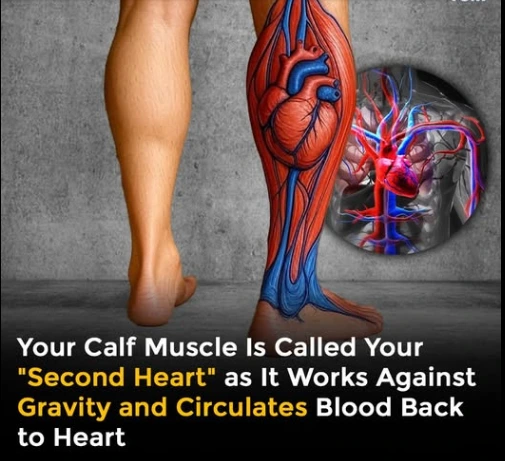
The Science Behind the “Second Heart”
Your heart pumps blood throughout your body, delivering oxygen and nutrients to every cell. But here’s the challenge: once blood reaches your feet and lower legs, it has to travel back UP to your heart—against gravity. This is where your calf muscles become absolute heroes.
The Calf Muscle Pump Mechanism
Your calf muscles (primarily the gastrocnemius and soleus) act as a powerful pumping mechanism. Here’s how it works:
- Muscle Contraction: When you walk, run, or even stand on your toes, your calf muscles contract
- Venous Compression: This contraction squeezes the deep veins in your lower leg
- Blood Propulsion: The compressed veins push blood upward toward your heart
- One-Way Valves: Valves in your veins prevent blood from flowing backward
- Muscle Relaxation: When the muscle relaxes, the veins refill with blood from below, and the cycle repeats
What the Research Says
According to a study published in the Journal of Vascular Surgery, the calf muscle pump can generate pressures of up to 200 mmHg—comparable to systolic blood pressure. Research from the European Journal of Applied Physiology shows that calf muscle contractions can increase venous return by up to 60% during exercise.
The National Institutes of Health recognizes the calf muscle pump as essential for preventing venous insufficiency and maintaining cardiovascular health.
The Sitting Epidemic: What Happens When Your Second Heart Stops Beating
Now here’s where things get concerning. The average American sits for 6-8 hours per day. When you’re sitting, your calf muscles are essentially dormant—they’re not contracting, which means they’re not pumping blood back to your heart efficiently.
Consequences of Prolonged Sitting
- Blood Pooling: Blood accumulates in the lower legs, leading to swelling and discomfort
- Increased Risk of DVT: Deep Vein Thrombosis (blood clots) becomes more likely with prolonged inactivity
- Varicose Veins: Weakened vein walls and valves can develop over time
- Chronic Venous Insufficiency: A condition where blood doesn’t flow properly back to the heart
- Reduced Cardiovascular Fitness: Your overall circulatory efficiency decreases
Did You Know? According to the World Health Organization, physical inactivity is the fourth leading risk factor for global mortality, accounting for 6% of deaths worldwide. Prolonged sitting increases the risk of cardiovascular disease by up to 147%.
How to Keep Your Second Heart Strong
The good news? You don’t need to become a marathon runner to maintain healthy calf function. Here are scientifically-backed strategies to keep your second heart pumping:
1. Incorporate Regular Movement
The 30-Minute Rule: Stand up and move for at least 2-3 minutes every 30 minutes of sitting. This simple habit can dramatically improve circulation.
2. Calf-Strengthening Exercises
- Standing Calf Raises – 3 sets of 15-20 reps
- Seated Calf Raises – 3 sets of 20-25 reps
- Single-Leg Calf Raises – 3 sets of 10-12 reps per leg
- Jump Rope – 5-10 minutes daily
3. Walking—The Ultimate Calf Exercise
Walking is perhaps the most underrated exercise for calf health. Aim for at least 7,000-10,000 steps per day. According to research from the American Journal of Preventive Medicine, regular walking reduces the risk of venous disease by up to 50%.
4. Ankle Mobility Work
Flexible ankles allow for better calf muscle activation. Try these daily:
- Ankle circles: 10 rotations each direction
- Ankle pumps: 20 repetitions
- Calf stretches: Hold for 30 seconds, 3 times per leg
5. Compression Therapy (When Needed)
For people who sit for extended periods or have circulation issues, compression socks can help support the calf muscle pump. Studies show they can reduce leg swelling by 30-40% and improve venous return.
When Weak Calves Signal Something More Serious
Sometimes, weak or inactive calves aren’t just a fitness issue—they can indicate underlying health problems:
- Peripheral Artery Disease (PAD): Reduced blood flow to the legs
- Chronic Venous Insufficiency: Damaged vein valves
- Neurological Issues: Nerve damage affecting muscle function
- Heart Failure: In advanced cases, fluid retention in the legs
When to See a Doctor: If you experience persistent leg swelling, pain, discoloration, or heaviness in your legs, consult a healthcare provider. These could be signs of venous insufficiency or other circulatory problems.
The Bottom Line
Your calves truly are your second heart, and keeping them strong and active is essential for overall health. Whether you’re an athlete or someone who sits at a desk all day, prioritizing calf health through regular movement, targeted exercises, and lifestyle adjustments can have profound effects on your circulation, energy levels, and long-term wellness.
Remember: every step you take is your second heart beating. So get up, move around, and show those calves some love!
Tools to Keep Your Second Heart Healthy
Want to take your calf health to the next level? Here are some highly-rated products that can help:
Compression Socks
Graduated compression helps support blood flow during long periods of sitting or travel. Perfect for office workers and frequent flyers. View on Amazon
Calf Massage Roller
Deep tissue massage improves circulation and helps prevent muscle tightness. Essential for post-workout recovery. View on Amazon
Resistance Bands
Perfect for calf raises and ankle mobility exercises. Compact and great for home or travel workouts. View on Amazon
Standing Desk Converter
Alternate between sitting and standing throughout the day to keep your calf muscles engaged and active. View on Amazon
Calf Stretcher Board
Improve ankle flexibility and calf flexibility with this simple, effective tool. Just 5 minutes daily makes a difference. View on Amazon
Fitness Tracker Watch
Track your steps, set movement reminders, and monitor your daily activity to ensure you’re keeping your second heart healthy. View on Amazon
Some links on this page are affiliate links. This means we may earn a commission if you buy through them — without any additional cost to you. This helps support our work and keep our content free.
Stay active. Stay healthy. Keep your second heart beating strong! 💪❤️

Michele Jordan is a Physical Education professional specialized in Pilates and functional training. She writes about movement, wellness, and healthy aging at Nutra Global One. Read more: https://nutraglobalone.com/about-michele-jordan/