
The most common health complaint I hear from otherwise “healthy” adults isn’t pain or illness. It’s exhaustion. Not the kind that disappears after a good night’s sleep or a long weekend, but a deeper, grinding fatigue that seeps into mornings, lingers through afternoons, and flattens evenings into numbness. People describe it as feeling wrung out, foggy, emotionally thin. And almost everyone blames themselves.
The wellness industry has been quick to offer answers. Buy the candle. Download the meditation app. Track your sleep. Drink the powder. Optimize your morning routine. If you’re still tired, the implication goes, you’re doing self-care wrong.
That story is comforting. It suggests control. It also happens to be largely false.
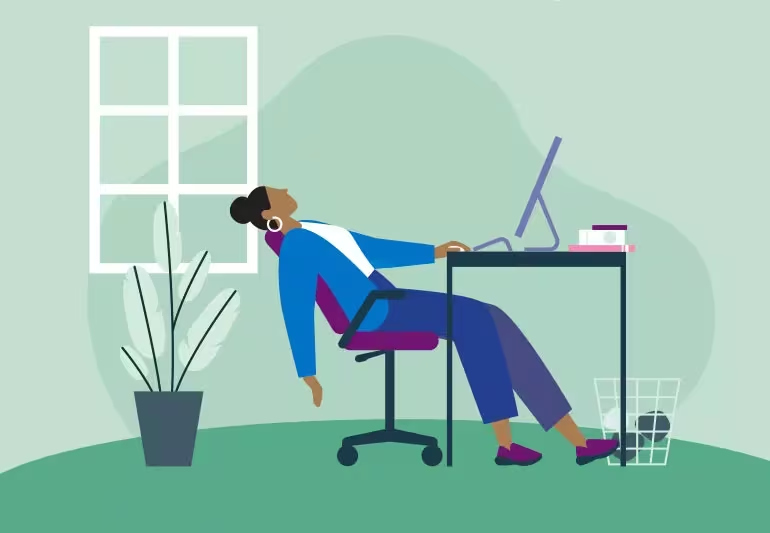
Burnout Isn’t a Personal Failure. It’s a Systemic One.
Recent surveys show burnout rates among U.S. workers remain stubbornly high, even as companies roll out “wellness benefits” at record pace. When researchers ask workers what’s draining them, the answers are remarkably consistent: workload creep, constant digital availability, job insecurity, and a sense that no amount of effort is ever enough. What’s missing from those lists is lavender oil.
Burnout is not simply stress. It’s what happens when stress becomes chronic and inescapable. Your nervous system never fully powers down. Cortisol, the hormone meant to help you respond to short-term threats, stays elevated long after the threat has passed. Over time, that biochemical state rewires how your body handles energy, sleep, mood, and even immunity. No bubble bath can undo that.
Sleep Debt Is the New Normal—and It’s Not an Accident
Most adults know they’re not sleeping enough. Fewer understand how deeply structural that problem is. Long commutes, irregular schedules, second jobs, caregiving responsibilities, and round-the-clock work messaging all carve into the hours once reserved for rest. Add smartphones that deliver social pressure, bad news, and work demands straight into bed, and the brain never gets a clear signal that the day is over.
Sleep debt accumulates quietly. You don’t feel it all at once. You feel it as irritability, forgetfulness, and a low-grade sense of being behind on your own life. The wellness response is usually to sell better sleep hygiene. The harder truth is that many people are trying to sleep inside systems that actively prevent it.
Smartphones Don’t Just Steal Time. They Steal Recovery.
The average adult now spends hours a day toggling between apps designed to keep attention slightly agitated and never satisfied. This isn’t just about distraction. It’s about physiological arousal. Each notification, headline, and scroll nudges the stress response just enough to matter.
True recovery requires boredom, stillness, and mental safety. Endless digital stimulation offers the opposite. Yet most advice frames phone overuse as a matter of discipline, not design. The platforms profit from your exhaustion, then sell you productivity tools to cope with it.
The Wellness Industry’s Quiet Conflict of Interest
Here’s the uncomfortable truth: a population that is structurally rested would be bad for business. The modern wellness industry thrives on the idea that exhaustion is an individual optimization problem. If you’re tired, you need a better routine, a better supplement, a better mindset.
This framing neatly sidesteps larger questions about labor practices, economic precarity, healthcare access, and the erosion of boundaries between work and life. It also shifts responsibility away from employers, policymakers, and tech companies—and onto the already depleted individual.
Even well-meaning advice can reinforce this trap. When rest is framed as something you must earn or perfect, it stops being restorative. It becomes another performance.
Why This Matters Now
Exhaustion isn’t just a feeling. It shapes how people parent, vote, relate, and imagine the future. Chronic fatigue narrows empathy. It reduces risk tolerance. It makes people easier to control and harder to mobilize. A tired population is a compliant one.
That’s why the question worth asking isn’t “How can I do better self-care?” It’s “Why am I so tired in the first place—and who benefits from that being my problem to solve alone?”
Real relief won’t come from another app or ritual. It will come from cultural shifts that protect sleep, limit digital intrusion, value recovery, and treat human energy as finite and precious. Until then, many adults will keep blaming themselves for a fatigue that was engineered long before they ever bought the candle.

Michele Jordan is a Physical Education professional specialized in Pilates and functional training. She writes about movement, wellness, and healthy aging at Nutra Global One. Read more: https://nutraglobalone.com/about-michele-jordan/