
When you think of high-protein foods, your mind probably jumps straight to chicken breast, steak, or maybe a protein shake. But what if I told you that one of the most protein-dense foods on the planet is sitting in your refrigerator’s cheese drawer?
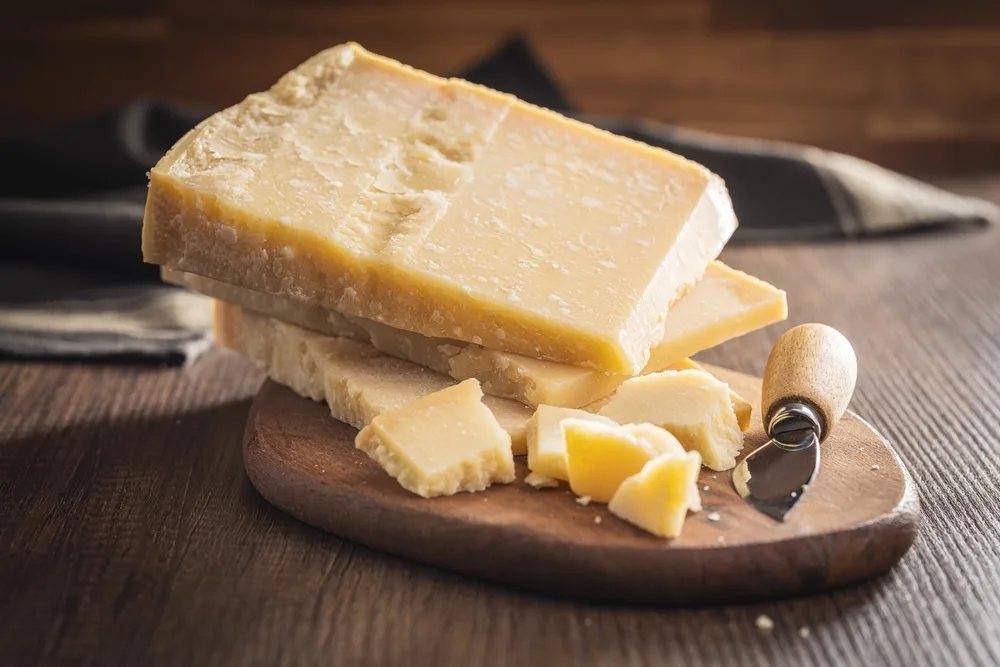
Enter Parmigiano-Reggiano, the king of cheeses and an absolute protein champion.
The Numbers Don’t Lie
Here’s a stat that might blow your mind: authentic Parmigiano-Reggiano from Italy’s Parma and Reggio Emilia regions contains 35.8 grams of protein per 100 grams. To put that in perspective:
- That’s 41% more protein than beef (25.4g per 100g)
- A whopping 54% more than chicken (23.3g per 100g)
- Even 15% more than chicken breast specifically
With 10 grams of protein packed into just one ounce, Parmesan genuinely exceeds the protein content of chicken, beef, and fish on a gram-for-gram basis. That’s pretty remarkable for something most people just sprinkle on pasta.
The Secret Behind the Density
So what makes Parmesan such a protein powerhouse? It all comes down to the traditional production process and that crucial aging period.
Authentic Parmigiano-Reggiano must age for a minimum of 12 months. During this time, whey is expelled and the moisture content drops to just 30%. What you’re left with is an incredibly concentrated protein source—nature’s own protein concentrate, if you will.
Think of it this way: all the protein from the original milk gets condensed into a much smaller, denser package. It’s like the difference between fresh grapes and raisins—same nutrients, way more concentrated.
Quality Matters Just as Much as Quantity
The protein density is impressive enough, but what really sets Parmesan apart is the quality of that protein.
It’s complete protein: Parmigiano-Reggiano contains all the essential amino acids your body can’t produce on its own, putting it on par with meat as a high biological value protein source.
It’s pre-digested: During the extended aging process—especially in cheeses aged over two years—the proteins break down into more easily absorbed forms. It’s similar to pre-digestion, making it gentler on your digestive system.
It’s virtually lactose-free: Lactic bacteria ferment all the lactose into lactic acid within the first 48 hours of production, with undetectable quantities below 0.01 grams per 100 grams. Great news for the lactose-intolerant among us.
The Calcium Bonus
As if the protein content wasn’t impressive enough, Parmesan also delivers a serious calcium punch: 1,184 milligrams per 100 grams. And thanks to high bioavailability, your body efficiently absorbs both the protein and minerals.
The Reality Check
Before you start replacing your chicken dinners with blocks of Parmesan, there’s an important caveat: it’s calorie-dense at 392 calories per 100 grams and high in sodium.
This is why nutritionists recommend using Parmigiano-Reggiano as a garnish or flavor enhancer rather than a primary protein source. Those typical small serving sizes (a tablespoon or two grated over pasta) are there for a reason.
But for adding a protein boost to your meals? A little sprinkle of real Parmesan goes a surprisingly long way—not just in flavor, but in nutritional value too.
The Bottom Line
Parmigiano-Reggiano might not replace your post-workout chicken breast, but it deserves recognition as one of the most protein-dense natural foods available. Its combination of high protein content, complete amino acid profile, excellent digestibility, and bonus calcium makes it a nutritional heavyweight.
So next time you’re grating some over your pasta or risotto, you can feel pretty good about that choice. Just maybe don’t eat it by the block.
What’s your favorite way to use Parmesan? Let me know in the comments below!

Michele Jordan is a Physical Education professional specialized in Pilates and functional training. She writes about movement, wellness, and healthy aging at Nutra Global One. Read more: https://nutraglobalone.com/about-michele-jordan/